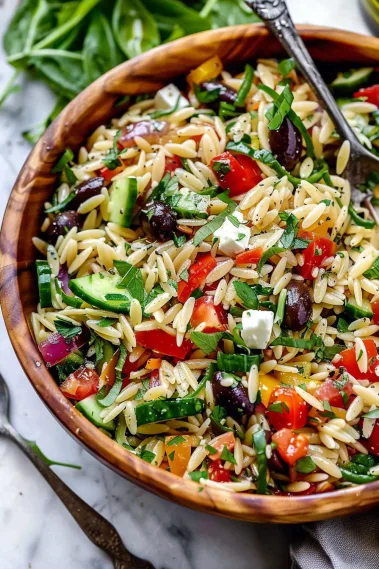
There’s something magical about a dish that transports you straight to the sun-drenched shores of the Mediterranean with just one bite. This Mediterranean Orzo Salad does exactly that, combining tender pasta pearls with vibrant vegetables, tangy feta cheese, and a zesty lemon dressing that’ll make your taste buds dance.

Essential Preparation Tips for Success
Cooking the Orzo to Perfection
The foundation of any great orzo salad starts with properly cooked pasta. First and foremost, you’ll want to bring a large pot of generously salted water to a rolling boil before adding your orzo. Use about one tablespoon of salt per four cups of water to ensure the pasta absorbs flavor during cooking. Once the water’s boiling, add the orzo and stir immediately to prevent sticking. Cook it according to package directions, typically around 8-10 minutes, but aim for al dente texture rather than soft. This is crucial because the pasta will continue absorbing liquid from the dressing as it sits. After cooking, drain the orzo in a fine-mesh strainer and rinse it under cold water to stop the cooking process. Then, spread it on a baking sheet to cool completely, which prevents clumping and ensures even distribution in your salad.
You might also love this refreshing recipe: Cottage Cheese and Chickpeas Salad
Prepping Vegetables for Maximum Freshness
The quality of your vegetables directly impacts the final dish, so take time to prepare them properly. Start by selecting firm, ripe cherry tomatoes with vibrant color and no soft spots. Cut them in half to release their juices, which will blend into the dressing beautifully. When it comes to cucumbers, English varieties work best because they have fewer seeds and a thinner skin that doesn’t need peeling. Dice them into bite-sized pieces that match your orzo’s size for visual appeal and easy eating. As for the red onion, dice it finely and consider soaking the pieces in cold water for ten minutes if you prefer a milder flavor. This technique removes some of the harsh bite while maintaining that characteristic onion crunch. Finally, make sure all vegetables are thoroughly dried before adding them to your salad, as excess moisture can dilute the dressing.
Ingredients
| Ingredient | Quantity |
|---|---|
| Orzo pasta | 1½ cups (300g) |
| Cherry tomatoes, halved | 2 cups |
| English cucumber, diced | 1 medium |
| Kalamata olives, pitted and halved | ¾ cup |
| Red onion, finely diced | ½ medium |
| Feta cheese, crumbled | 1 cup (150g) |
| Fresh parsley, chopped | ½ cup |
| Fresh basil, chopped | ¼ cup |
| Extra virgin olive oil | ⅓ cup |
| Fresh lemon juice | 3 tablespoons |
| Red wine vinegar | 2 tablespoons |
| Garlic cloves, minced | 2 |
| Dried oregano | 1 teaspoon |
| Salt | 1 teaspoon |
| Black pepper | ½ teaspoon |
Creating the Perfect Mediterranean Dressing
Balancing Acidic and Rich Elements
The dressing is where this Mediterranean orzo salad truly comes alive, transforming simple ingredients into something extraordinary. Begin by whisking together fresh lemon juice and red wine vinegar in a small bowl. These acidic components provide brightness and help cut through the richness of the feta and olive oil. Next, add minced garlic and dried oregano, which infuse the dressing with that unmistakable Mediterranean character. Consequently, you’ll want to let these aromatics sit for a few minutes to mellow slightly. Then, slowly drizzle in your extra virgin olive oil while whisking constantly to create an emulsion. This technique ensures the dressing stays together rather than separating into oily and watery layers. Season generously with salt and freshly ground black pepper, tasting as you go to achieve the perfect balance.
Timing Your Dressing Application
When you add the dressing matters more than you might think. For the best results, toss the cooled orzo with about half the dressing first, allowing it to absorb those flavors while you finish prepping other ingredients. This initial coating prevents the pasta from sticking together and ensures every piece is well-seasoned. After that, add your vegetables, olives, and most of the feta cheese, then pour over the remaining dressing. Toss everything gently but thoroughly to distribute the dressing evenly without crushing the tomatoes or breaking up the feta too much. If you’re making this salad ahead of time, reserve a little dressing to refresh the dish just before serving, as pasta tends to absorb liquid as it sits. This simple trick keeps your salad tasting fresh and vibrant even after a day in the refrigerator.
Customization Options and Variations
Protein Additions for a Complete Meal
While this pasta salad is satisfying on its own, adding protein transforms it into a complete, filling meal. Grilled chicken is perhaps the most popular addition; simply season boneless, skinless chicken breasts with Mediterranean spices and grill until cooked through, then slice and toss with the salad. Alternatively, shrimp makes an elegant option that cooks quickly and pairs beautifully with lemon and herbs. For a vegetarian protein boost, chickpeas are fantastic; they’re already common in Mediterranean cuisine and add both protein and fiber. Additionally, you might try adding chunks of grilled halloumi cheese, which maintains its shape when heated and provides a delightful squeaky texture. These additions don’t just increase the nutritional value; they also make the dish substantial enough to serve as a main course rather than a side.

Vegetable Swaps and Seasonal Adaptations
One of the best things about this recipe is its flexibility. During summer months, consider adding grilled zucchini or roasted red peppers for extra smoky sweetness. Artichoke hearts, whether marinated or fresh, bring a sophisticated touch that pairs wonderfully with the existing flavors. In spring, asparagus cut into one-inch pieces and lightly blanched adds a fresh, green element. You can also swap the cherry tomatoes for sun-dried tomatoes when fresh ones aren’t at their peak, though you’ll want to chop them finely and reduce the salt slightly since they’re quite intense. Some people love adding a handful of baby spinach or arugula just before serving for extra greens and a peppery bite. The key is maintaining that balance between fresh vegetables, briny elements, and creamy cheese that defines Mediterranean cuisine.
Serving Suggestions and Presentation
Making Your Salad Instagram-Worthy
Presentation can elevate even the simplest dish into something special. Transfer your Mediterranean orzo salad to a large, shallow serving bowl or platter rather than a deep bowl, which allows guests to see all the colorful ingredients. Before serving, top with additional crumbled feta cheese and a handful of freshly chopped herbs for that just-made appearance. A drizzle of good quality olive oil over the top adds shine and reinforces the Mediterranean aesthetic. You might also scatter a few whole Kalamata olives around the edges and add lemon wedges for both decoration and practical purposes, as some guests may want extra citrus. If you’re serving this at a gathering, consider using individual glass jars or small bowls for a modern, portable presentation that’s perfect for outdoor events.
Pairing Ideas for Complete Mediterranean Meals
This versatile salad works beautifully as either a side dish or main course, depending on what you serve alongside it. As a side, it complements grilled meats wonderfully, particularly lamb chops, chicken souvlaki, or salmon. The bright, acidic notes in the salad cut through rich proteins perfectly. For a completely vegetarian spread, serve it alongside stuffed grape leaves, hummus with warm pita bread, and baba ganoush. At summer barbecues, this cold pasta salad provides a refreshing contrast to hot grilled items. It’s also fantastic for picnics because it doesn’t require refrigeration for short periods and actually tastes better at room temperature. When serving as a main dish, simply add crusty bread and perhaps a simple green salad dressed with olive oil and lemon for a light, satisfying meal.
If you enjoy Mediterranean flavors, don’t miss this recipe: BBQ Chicken Salad
Storage and Make-Ahead Strategies
Proper Storage for Maximum Freshness
One major advantage of this dish is how well it keeps, making it perfect for meal prep. Store your Greek pasta salad in an airtight container in the refrigerator for up to four days. However, there’s a smart strategy to keep it tasting fresh throughout that time. If you know you’ll be eating it over several days, consider storing the dressed orzo separately from the feta cheese and fresh herbs. This prevents the cheese from breaking down too much and the herbs from wilting. When you’re ready to serve, simply add the reserved cheese and herbs, give everything a good toss, and refresh with a splash of olive oil and lemon juice if needed. This approach ensures each serving tastes as vibrant as the first day.
Freezing Guidelines and Limitations
While many dishes freeze beautifully, this particular salad isn’t ideal for freezing due to its fresh vegetable components. Cucumbers, tomatoes, and feta cheese all have high water content that creates unpleasant texture changes when frozen and thawed. The vegetables become mushy and watery, while the feta becomes crumbly and loses its creamy quality. However, if you absolutely need to make components ahead, you can cook and freeze the orzo by itself. Toss the cooked, cooled pasta with a tiny bit of olive oil, spread it on a baking sheet to freeze individually, then transfer to a freezer bag. When needed, thaw it in the refrigerator overnight, then proceed with the recipe as usual. This method preserves the pasta’s texture while still allowing some advance preparation.
Frequently Asked Questions
Can I make this Mediterranean orzo salad the day before?
Absolutely! In fact, this salad benefits from being made ahead because it gives all the flavors time to meld together beautifully. Prepare the entire salad up to 24 hours in advance, but hold back some of the fresh herbs and a portion of the feta cheese.
What can I substitute for orzo if I can’t find it?
While orzo’s unique rice-like shape is part of what makes this salad special, several alternatives work well. Pearl couscous, also called Israeli couscous, is probably the closest substitute in terms of size and texture.
How do I prevent my pasta salad from drying out?
Pasta naturally absorbs liquid as it sits, which is why many pasta salads seem dry after refrigeration. To combat this, reserve about one-quarter of your dressing when initially mixing the salad. Store this extra dressing separately in the refrigerator. Before serving, drizzle the reserved dressing over the salad and toss well to rehydrate it.
Is this recipe suitable for people with dietary restrictions?
This Mediterranean orzo salad is naturally vegetarian, making it perfect for non-meat eaters. However, it does contain dairy in the form of feta cheese, so it’s not vegan as written.
What’s the best way to transport this salad to a potluck or picnic?
Transporting pasta salad requires some planning to keep it fresh and safe. Use a container with a tight-fitting lid to prevent spills and keep the salad contained.
Conclusion
This Mediterranean orzo salad brings together everything we love about Mediterranean cuisine in one beautiful, delicious dish. It’s packed with fresh vegetables, tangy feta, and briny olives, all tied together with a bright lemon dressing that makes every bite memorable.
Print
Mediterranean Orzo Salad
- Total Time: 30 minutes
- Yield: 6 servings
Description
A vibrant, refreshing pasta salad featuring tender orzo, crisp vegetables, tangy feta cheese, and Kalamata olives tossed in a zesty lemon dressing. Perfect for summer gatherings, meal prep, or as a light main course.
Ingredients
- Orzo pasta – 1½ cups (300g)
- Cherry tomatoes, halved – 2 cups
- English cucumber, diced – 1 medium
- Kalamata olives, pitted and halved – ¾ cup
- Red onion, finely diced – ½ medium
- Feta cheese, crumbled – 1 cup (150g)
- Fresh parsley, chopped – ½ cup
- Fresh basil, chopped – ¼ cup
- Extra virgin olive oil – ⅓ cup
- Fresh lemon juice – 3 tablespoons
- Red wine vinegar – 2 tablespoons
- Garlic cloves, minced – 2
- Dried oregano – 1 teaspoon
- Salt – 1 teaspoon
- Black pepper – ½ teaspoon
Instructions
- 1. Bring a large pot of salted water to a boil. Add orzo and cook according to package directions until al dente, about 8-10 minutes. Drain and rinse under cold water, then spread on a baking sheet to cool completely.
- 2. While the orzo cools, prepare the dressing by whisking together olive oil, lemon juice, red wine vinegar, minced garlic, dried oregano, salt, and black pepper in a small bowl until well combined.
- 3. In a large mixing bowl, combine the cooled orzo with half of the dressing, tossing to coat evenly.
- 4. Add the halved cherry tomatoes, diced cucumber, halved Kalamata olives, and diced red onion to the bowl with the dressed orzo.
- 5. Pour the remaining dressing over the salad and toss gently to combine all ingredients.
- 6. Add the crumbled feta cheese and chopped fresh herbs, folding them in gently to avoid breaking up the cheese too much.
- 7. Taste and adjust seasoning if needed, adding more salt, pepper, or lemon juice to your preference.
- 8. Cover and refrigerate for at least 30 minutes before serving to allow flavors to meld, or serve immediately at room temperature.
Notes
Store in an airtight container in the refrigerator for up to 4 days. Reserve some feta and fresh herbs to add just before serving for best presentation. The salad can be made up to 24 hours ahead and actually tastes better the next day. Refresh with a drizzle of olive oil and lemon juice before serving if needed.
- Prep Time: 20 minutes
- Cook Time: 10 minutes
- Category: Salad
- Cuisine: Mediterranean
Nutrition
- Serving Size: 1 cup
- Calories: 285
- Sugar: 4g
- Sodium: 520mg
- Fat: 16g
- Carbohydrates: 28g
- Fiber: 3g
- Protein: 8g